
Product images are for informational purposes only and may vary slightly depending on the batch and supplier. Product specifications and prices may be subject to change without notice. We do our best to provide accurate and complete product specifications, but they may not be completely accurate. If you encounter any such situation, please let us know.
The product is intended for specialists and requires qualified and authorized personnel. The product does not include assembly/use instructions . Putting the product into operation by unqualified persons leads to the loss of the warranty according to the Terms and Conditions on the site.
The specified technical parameters (current, power, etc.) represent maximum allowable values under ideal operating conditions. For safe use and optimal lifespan, it is recommended to operate the product continuously at no more than 50% of the specified maximum values.
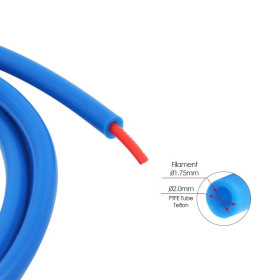
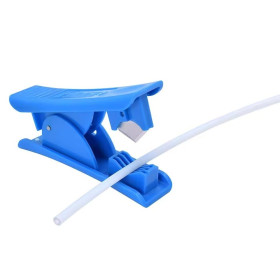
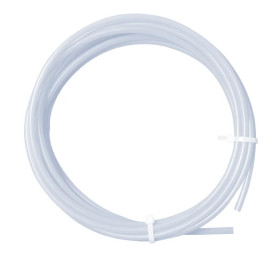
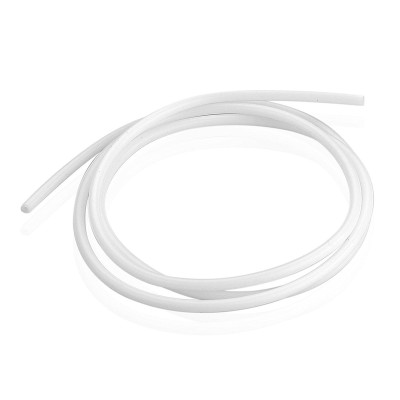
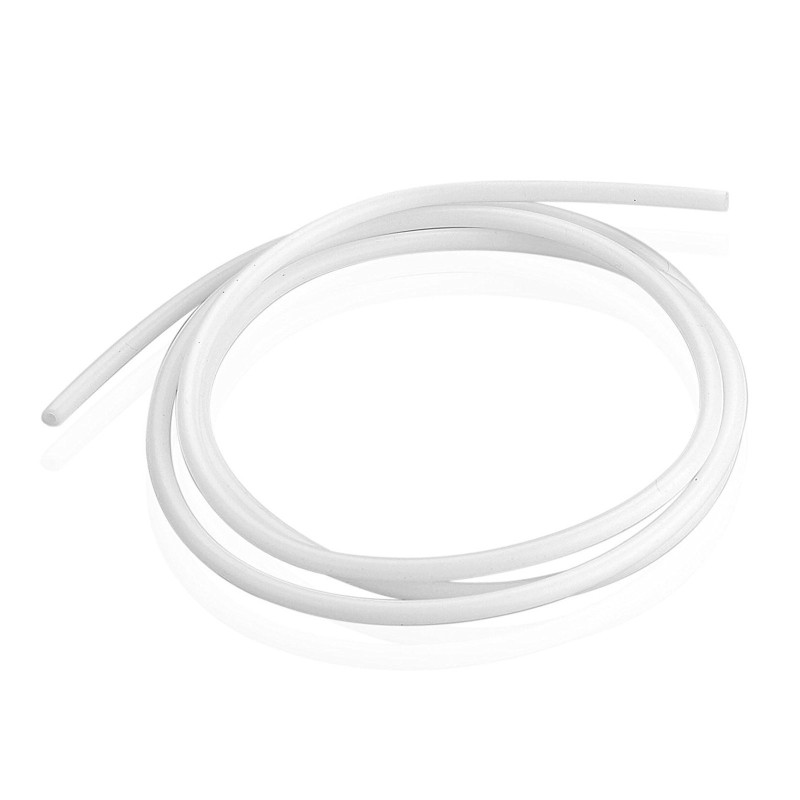
PTFE Tube 2x4mm, for 1.75 mm Filament, 1 meter
PTFE tube for smooth 1.75 filament guiding in 3D printers, reduces friction and improves feeding to the extruder. Size 2x4 mm, length 1 m, Teflon material with good resistance to temperature and wear, smooth interior for constant flow and wide compatibility with Bowden systems.
Shipping by Wednesday 11 November
Buying this product earns you 0.41 RON in loyalty points.

International fast shipping within EU. Free Shipping for orders above 100 EUR in most EU countries.

We ship from our stock within 24H

You earn points with every order, worth 5%.
The PTFE Teflon tube with an inner diameter of 2 mm and an outer diameter of 4 mm guides 1.75 mm filament between the extruder and the hotend on 3D printers with a Bowden type extruder. It is supplied in a length of 1 meter, which is cut to the required size, and is used both for a new installation and for replacing a worn or deformed tube.
PTFE has a very low friction coefficient, so the filament slides through the tube with little effort, and the extruder can push and retract it without significant losses. The 2 mm inner diameter leaves the 1.75 mm filament enough clearance for free sliding, and the 4 mm outer diameter fits the common pneumatic fittings on extruders and hotends. The material withstands working temperatures of up to 260 °C.
The main features include the PTFE material, the 2 mm inner and 4 mm outer diameters, compatibility with 1.75 mm filament and the length of 1 meter. The tube is a passive accessory, with no power supply, which is mechanically installed through its two ends into the printer fittings. It can also be used to guide the filament from the spool to the extruder or to a filament sensor.
Specifications:
Material: PTFE (Teflon)
Inner diameter: 2 mm
Outer diameter: 4 mm
Compatible filament: 1.75 mm
Maximum working temperature: 260 °C
Length: 1 meter
Dimensions: 1000 mm (length)
Usage:
Turn off the printer, remove the filament and let the hotend cool down before disassembling or installing the tube.
Measure the distance between the extruder fitting and the hotend fitting along the actual route, with the tube slightly curved and without tension, then add a few millimeters of reserve and mark the length on the tube.
Cut the tube with a very sharp cutter or with a special tube cutter, perpendicular to the axis and without burrs. An oblique cut leaves a gap where filament can accumulate and cause clogs.
Check the ends and cut again if raised edges remain, because the opening must remain perfectly round.
Remove the old tube, if present, by pressing the collar of the pneumatic fitting and pulling the tube out.
Insert the new tube into the extruder fitting until it stops, then into the hotend fitting until it reaches the end of the area where it is designed to enter, with no play between the tube and the nozzle or the hotend neck.
Gently pull both ends to check that they are locked by the fitting clips.
Heat the hotend to the temperature of the material used and feed the filament through the extruder. If it advances without effort and exits evenly through the nozzle, the installation is correct.
Do not use printing temperatures above 260 °C with the tube installed up to the hot zone, and do not use the tube for 3 mm filament.
For stable results, keep a wide curve without folds along the entire route, and if guiding worsens or the end towards the hotend has darkened in color or deformed, shorten the tube or replace it.
- Dimensions
- 1000 mm
- Material
- PTFE (Teflon)
- Operating temperature
- 260 °C
- Length
- 1 meter
- Outer diameter
- 4 mm
- Diameter
- 1.75 mm
- Inner diameter
- 2 mm
Produs destinat utilizarii in proiecte electronice, automatizari, prototipare, educatie si cercetare.
Produsul trebuie utilizat numai conform specificatiilor tehnice mentionate in descriere si/sau in documentatia produsului.
Avertismente generale de siguranta:
Nu utilizati produsul la tensiuni, curenti sau temperaturi peste valorile specificate.
Montajul si conectarea trebuie realizate de persoane cu cunostinte tehnice minime in domeniul electric/electronic.
Evitati scurtcircuitele, inversarea polaritatii si conectarea gresita a alimentarii.
Nu lasati produsul alimentat nesupravegheat in timpul testelor.
Produsul nu este jucarie si nu este destinat copiilor.
Pentru modulele electronice, se recomanda utilizarea in carcase, panouri sau montaje protejate, dupa caz.
Identificare produs:
Denumirea produsului, codul/SKU-ul si caracteristicile tehnice sunt mentionate in pagina produsului si/sau pe eticheta ambalajului.
Producator / Importator / Distribuitor:
Sigmanortec S.R.L.
Calea Bucuresti nr. 9, Targu Jiu, Gorj, Romania
E-mail: [email protected]
Website: www.sigmanortec.ro
Persoana responsabila in UE:
Sigmanortec S.R.L.
Calea Bucuresti nr. 9, Targu Jiu, Gorj, Romania
E-mail: [email protected]
Documentatie si siguranta:
Pentru informatii suplimentare, fise tehnice, declaratii de conformitate sau instructiuni, ne puteti contacta la [email protected].
Reviews (1) - Review moderation

The 1 meter PTFE Teflon tube, with an inner diameter of 2 mm and an outer diameter of 4 mm, is a passive accessory for 3D printers with a Bowden-type extruder. It guides the 1.75 mm filament from the extruder to the hotend, and it is also used to guide the filament from the spool to the extruder or to replace a worn tube.
The tutorial treats the product as a mechanical part mounted directly on the printer. Follow the steps for cutting, mounting and checking.
How it works:
PTFE is a material with very low friction. The filament slides through the tube much more easily than through an ordinary plastic channel or a free path with guides. The extruder pushes the filament, and the tube keeps it on track and does not let it bend between the extruder and the hotend.
The 2 mm inner diameter leaves a total clearance of 0.25 mm around the 1.75 mm filament, that is 0.125 mm on each side (2.0 mm - 1.75 mm = 0.25 mm). The clearance is enough for free sliding, but small enough so the filament does not get crushed or bend unnecessarily during retraction. The 4 mm outer diameter is the one for which the common pneumatic fittings on extruders and hotends are made.
PTFE withstands working temperatures of up to 260 °C. The end toward the hotend is the most thermally stressed area. Above this value the material degrades, which is why printing temperatures above 260 °C are not used with the tube fitted up to the hot zone.
Connection:
The tube has no power supply and does not connect electrically. It is mounted mechanically, through its two ends, into the fittings of the printer. Before mounting, switch off the printer and let the hotend cool down.
| Product pin | Connects to | Role |
|---|---|---|
| End 1 | Extruder fitting (filament outlet) | Receives the filament pushed by the extruder and feeds it into the tube. |
| End 2 | Hotend fitting (filament inlet) | Guides the filament to the hotend, to the melting zone. |
Configuration:
Measure the distance between the two fittings along the actual path the tube takes, with the tube slightly curved and without tension. Add a few millimeters of spare length, then mark the length on the tube with a marker.
Cut the tube with a very sharp cutter or with a special tube cutting tool. The cut must be perpendicular to the tube and free of burrs. An angled end cut leaves a gap between the tube and the nozzle or between the tube and the extruder, and in that gap the melted or just softened filament can build up and cause clogs.
Check the ends. If raised edges remain, cut again. Filament guiding is better if the opening stays perfectly round.
Remove the old tube, if there is one. Press the ring of the pneumatic fitting and pull the tube out. Insert the new tube until it stops in the fitting, then pull gently to check that it is locked by the fitting's clip.
At the hotend end, the tube must reach the end of the zone where it is meant to enter. Generally the tube rests on the nozzle or on the neck of the hotend, without clearance. If clearance remains, the filament can bunch up in the gap and the printer will clog.
Usage example:
Example for a 3D printer with a Bowden extruder that has a worn old tube. Switch off the printer, remove the filament and disconnect the old tube from both ends. Measure the path, cut the new 1 meter tube to the required length, then mount end 1 in the extruder and end 2 in the hotend. Check that both ends are locked in the fittings.
Heat the hotend to the temperature of the material used, for example for PLA, and insert the filament through the extruder. If the filament advances without effort and comes out evenly through the nozzle, the assembly is correct. Then do a retraction test and a short print, to check that no blockages appear.
With a correct assembly the tube forms a smooth curve without creases. The tube guiding must allow the print head to move across the full travel without pulling on the tube.
Common problems:
The filament jams or advances with difficulty. The usual cause is an angled or burred cut, or a crease in the tube. Cut the end again, at a right angle, and straighten the tube path.
Stringing or blobs appear during printing, especially during retraction. The cause can be a clearance between the tube and the nozzle, where the filament bunches up. Push the tube all the way into the hotend fitting and lock it firmly.
The tube pops out of the fitting during printing. The fitting clip does not hold it. Check that the tube is cut straight and that its outer diameter is 4 mm, then replace the worn fitting if necessary.
The tube has discolored, deformed or yellowed at the hotend end. The temperature there has exceeded the material limit. Shorten the tube to the undamaged section and respect the 260 °C limit.
Abrasive filament or filament with impurities leaves marks in the tube. If the guiding gets worse, replace the tube with a new one.
Limitations and tips:
The tube is designed for 1.75 mm filament. It is not suitable for 3 mm filament. The maximum working temperature is 260 °C, so it is not recommended for materials that require higher printing temperatures in direct contact with the tube.
PTFE wears over time, especially at the hotend end. It is good to keep a spare piece and replace it when the guiding gets worse. On a long Bowden path, retraction must be tuned in the slicer, because the filament has a longer way to travel.
The tube can also be used to guide filament from the spool to the extruder, to protect it from tangling, or to make a convenient route to a filament sensor. To avoid unnecessary friction, keep the curves wide.