

Product images are for informational purposes only and may vary slightly depending on the batch and supplier. Product specifications and prices may be subject to change without notice. We do our best to provide accurate and complete product specifications, but they may not be completely accurate. If you encounter any such situation, please let us know.
The product is intended for specialists and requires qualified and authorized personnel. The product does not include assembly/use instructions . Putting the product into operation by unqualified persons leads to the loss of the warranty according to the Terms and Conditions on the site.
The specified technical parameters (current, power, etc.) represent maximum allowable values under ideal operating conditions. For safe use and optimal lifespan, it is recommended to operate the product continuously at no more than 50% of the specified maximum values.
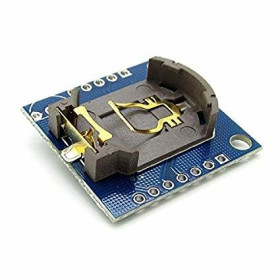
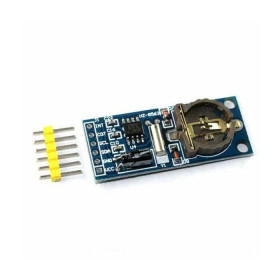
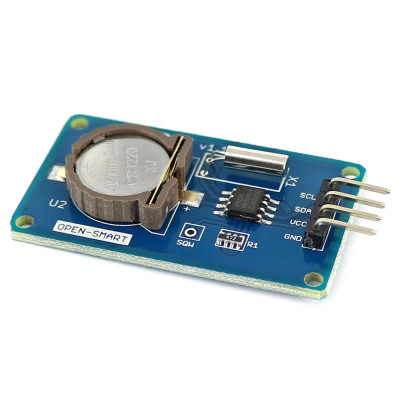
RTC Module DS1307, I2C Interface, 5V
Real-time clock for embedded projects, maintains date and time even without power through backup on CR1220 battery. Communicates simply via I2C at 0x68 using only SDA and SCL, offers full time with automatic correction for months and leap years up to 2100, supports 24h or 12h format with AM PM, and includes 56 bytes of non-volatile RAM for settings.
Shipping by Thursday 22 October
Buying this product earns you 0.13 € in loyalty points.

International fast shipping within EU. Free Shipping for orders above 100 EUR in most EU countries.

We ship from our stock within 24H

You earn points with every order, worth 5%.
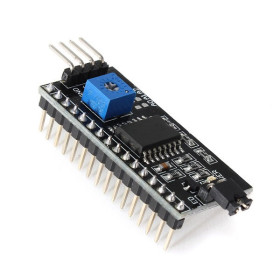
The RTC DS1307 module is a precision real-time clock based on the DS1307 integrated circuit, designed for applications that require accurate tracking of date and time in embedded systems. It provides complete time information: seconds, minutes, hours, day of the week, date, month, and year, with automatic compensation for months with less than 31 days and for leap years up to 2100, eliminating the need for manual corrections in the firmware.
The module supports both 24-hour format and 12-hour format with AM/PM indicator, and includes 56 bytes of non-volatile RAM, useful for storing configuration or logging data. Communication with the microcontroller is done via the I2C interface at the fixed address 0x68, using only two pins (SDA and SCL), making it compatible with 5V boards such as Arduino Uno, Arduino Mega, as well as STM32, ESP32, and any other platform that supports the I2C protocol, as long as a logic level converter to 3.3V. is used.
An integrated voltage drop detection circuit automatically switches to the CR1220 backup battery not included (2.0-3.5V) when the main 5V power supply is interrupted, maintaining the correct time over extended periods without external power. The 32.768 kHz quartz crystal ensures an accuracy of approximately 1 second per day, and the operating temperature range between -40 and 85°C allows use in demanding industrial environments.
Specifications:
Operating voltage: 5 VDC
Backup battery voltage: 2.0 - 3.5V (CR1220), NOT INCLUDED
Normal mode current consumption: ~1.5 mA
Interface: I2C
I2C address: 0x68
RAM memory: 56 bytes
Crystal frequency: 32.768 kHz
Time format: 24-hour / 12-hour with AM/PM
Accuracy: ~1 second/day (depending on crystal)
Operating temperature: -40 ~ 85°C
Dimensions: 41 x 23 mm
Pinout:
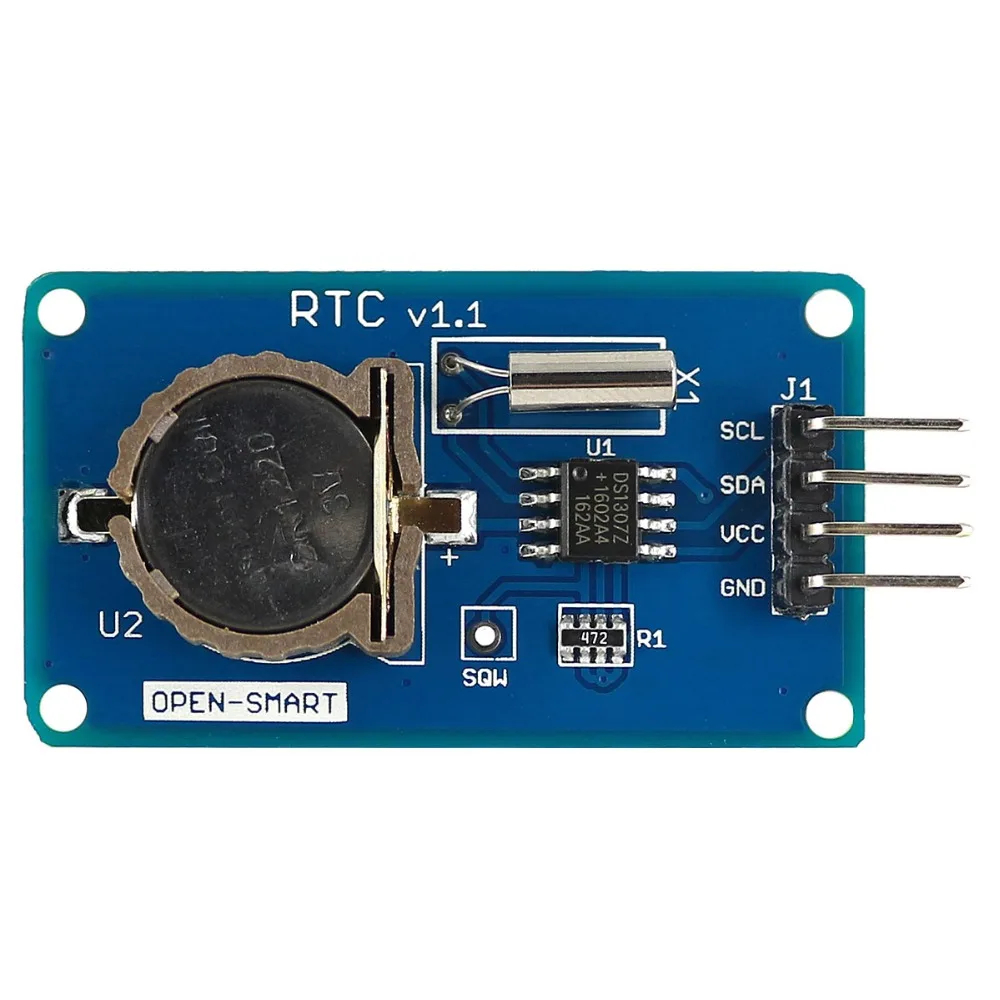
| Pin | Description |
|---|---|
| VCC | 5 VDC |
| GND | GND |
| SDA | Communication via I2C interface |
| SCL | Communication via I2C interface |
Usage:
Connect VCC to 5V and GND to the development board ground.
Connect SDA and SCL to the corresponding pins of the platform used (e.g. A4/A5 on Arduino Uno, pins 21/22 on Arduino Mega, GPIO21/GPIO22 on ESP32).
Install the CR1220 battery in the module holder to ensure time retention when the main power is absent.
Install the RTClib library from the Arduino IDE Library Manager.
On first use or after replacing the battery, set the initial time by calling rtc.adjust() in the initialization code.
Data is stored and read in BCD (Binary Coded Decimal) format from the internal registers of the DS1307 circuit.
Call rtc.now() to obtain a DateTime object with all available time fields.
WARNING! Although the module operates at 5V, when using it with ESP32 (3.3V) it is recommended to use a logic level converter to avoid damaging the microcontroller's data pins.
- Main IC
- DS1307
- Supply voltage
- 5 V
- Communication interface
- I2C
Produs destinat utilizarii in proiecte electronice, automatizari, prototipare, educatie si cercetare.
Produsul trebuie utilizat numai conform specificatiilor tehnice mentionate in descriere si/sau in documentatia produsului.
Avertismente generale de siguranta:
Nu utilizati produsul la tensiuni, curenti sau temperaturi peste valorile specificate.
Montajul si conectarea trebuie realizate de persoane cu cunostinte tehnice minime in domeniul electric/electronic.
Evitati scurtcircuitele, inversarea polaritatii si conectarea gresita a alimentarii.
Nu lasati produsul alimentat nesupravegheat in timpul testelor.
Produsul nu este jucarie si nu este destinat copiilor.
Pentru modulele electronice, se recomanda utilizarea in carcase, panouri sau montaje protejate, dupa caz.
Identificare produs:
Denumirea produsului, codul/SKU-ul si caracteristicile tehnice sunt mentionate in pagina produsului si/sau pe eticheta ambalajului.
Producator / Importator / Distribuitor:
Sigmanortec S.R.L.
Calea Bucuresti nr. 9, Targu Jiu, Gorj, Romania
E-mail: [email protected]
Website: www.sigmanortec.ro
Persoana responsabila in UE:
Sigmanortec S.R.L.
Calea Bucuresti nr. 9, Targu Jiu, Gorj, Romania
E-mail: [email protected]
Documentatie si siguranta:
Pentru informatii suplimentare, fise tehnice, declaratii de conformitate sau instructiuni, ne puteti contacta la [email protected].
#include <Wire.h>
#include "RTClib.h"
RTC_DS1307 rtc;
void setup() {
Serial.begin(9600);
if (!rtc.begin()) {
Serial.println("RTC module not found!");
while (1);
}
if (!rtc.isrunning()) {
Serial.println("RTC is not running! Setting time...");
// Sets date and time to compilation moment
rtc.adjust(DateTime(F(__DATE__), F(__TIME__)));
}
}
void loop() {
DateTime now = rtc.now();
Serial.print(now.year(), DEC);
Serial.print('/');
Serial.print(now.month(), DEC);
Serial.print('/');
Serial.print(now.day(), DEC);
Serial.print(' ');
Serial.print(now.hour(), DEC);
Serial.print(':');
Serial.print(now.minute(), DEC);
Serial.print(':');
Serial.print(now.second(), DEC);
Serial.println();
delay(1000);
}