

Product images are for informational purposes only and may vary slightly depending on the batch and supplier. Product specifications and prices may be subject to change without notice. We do our best to provide accurate and complete product specifications, but they may not be completely accurate. If you encounter any such situation, please let us know.
The product is intended for specialists and requires qualified and authorized personnel. The product does not include assembly/use instructions . Putting the product into operation by unqualified persons leads to the loss of the warranty according to the Terms and Conditions on the site.
The specified technical parameters (current, power, etc.) represent maximum allowable values under ideal operating conditions. For safe use and optimal lifespan, it is recommended to operate the product continuously at no more than 50% of the specified maximum values.
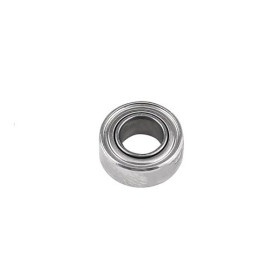
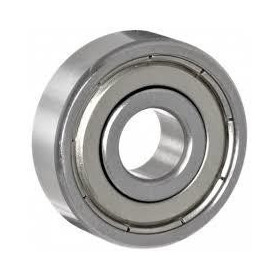
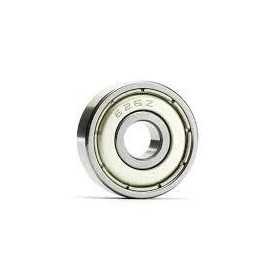
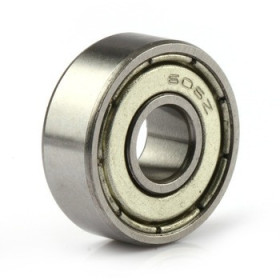
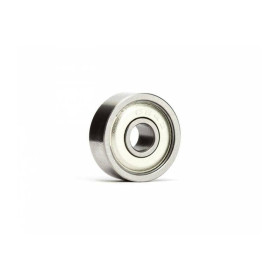
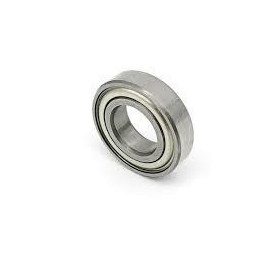
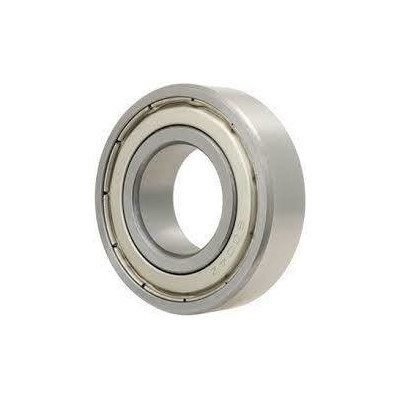
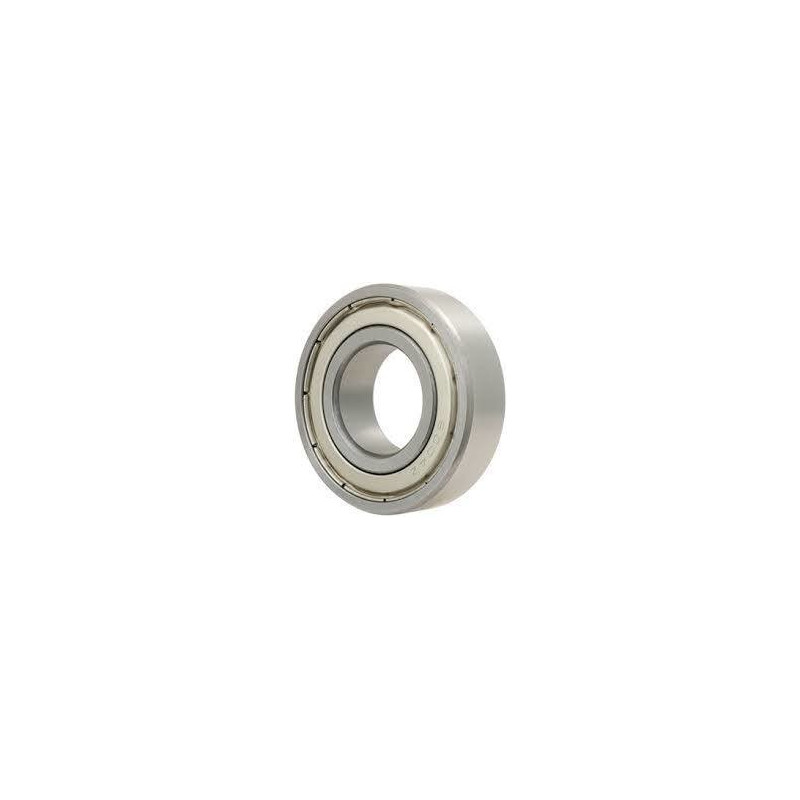
Bearing 623ZZ, radial ball bearing, 3x10x4mm, with metal shields
Miniature radial bearing for precise guidance and smooth rotation in compact mechanisms, ideal for small motors, 3D printers and hobby or industrial applications. It features ZZ metal shields for dust protection, stable operation at high speeds, low friction and a durable construction with 3x10x4 mm dimensions.
Shipping by Wednesday 11 November
Buying this product earns you 0.15 RON in loyalty points.

International fast shipping within EU. Free Shipping for orders above 100 EUR in most EU countries.

We ship from our stock within 24H

You earn points with every order, worth 5%.
The 623ZZ radial ball bearing is a compact bearing with a single row of balls and two metal shields, which allows a 3 mm shaft to rotate easily, with low friction and no play. It is suitable for guide and tension rollers, idler wheels, small belt or gear drives, mechanisms with 3 mm shafts, 3D printers and robotics projects.
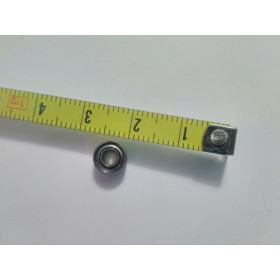
The bearing has a 3 mm bore, a 10 mm outer diameter and a width of 4 mm. Steel balls roll between the inner and outer rings and are kept apart by a cage, so that the sliding friction between the shaft and the housing is replaced by a much smaller rolling friction. The bearing primarily takes radial loads and can also take light axial loads, in both directions.
Among the main features are the inner ring with a 3 mm bore, the outer ring of 10 mm, the 4 mm width, the steel balls and two ZZ metal shields, which cover the balls on both sides and protect the lubricant from large particles. The bearing is passive, has no electrical supply and is mounted directly on the shaft and in the housing.
Specifications:
Model: 623ZZ
Type: Radial ball bearing, single row of balls
Sealing: ZZ metal shields on both sides
Inner diameter (bore): 3 mm
Outer diameter: 10 mm
Width: 4 mm
Dimensions: 3 x 10 x 4 mm
Usage:
Check with a caliper that the shaft is 3 mm in the area of the bearing and that the housing is 10 mm with a depth of at least 4 mm.
Clean the housing of debris and burrs, because a piece of plastic thread or a chip left under the bearing tilts it and produces noise and play.
Place the bearing straight over the housing and press evenly on the outer ring, for example with a tube with a diameter close to 10 mm, until it reaches the bottom of the housing.
If the bearing is mounted on the shaft, press only on the inner ring. The mounting force is applied to the ring that fits tightly in the part, not to the one that remains free.
Do not press on the metal shields and do not strike the bearing with a hammer, because the balls and raceways can deform.
Lock the bearing in the axial direction with a shoulder or a washer that rests only on the inner ring, because a washer touching the outer ring brakes the rotation.
Turn the roller or shaft by hand. The rotation should be smooth, without grinding noise, without hard spots and without felt play when you gently rock it.
Do not use the bearing for heavy loads or shocks and do not leave it in liquids or fine dust, because the metal shields do not seal the interior hermetically.
Do not wash the bearing with solvents and do not spin it with compressed air, because the lubricant may be blown out from inside.
- Dimensions
- 3 x 10 x 4 mm
- Model
- 623ZZ
- Type
- Radial ball bearing, single row
- Outer diameter
- 10 mm
- Width
- 4 mm
- Inner diameter
- 3 mm
Produs destinat utilizarii in proiecte electronice, automatizari, prototipare, educatie si cercetare.
Produsul trebuie utilizat numai conform specificatiilor tehnice mentionate in descriere si/sau in documentatia produsului.
Avertismente generale de siguranta:
Nu utilizati produsul la tensiuni, curenti sau temperaturi peste valorile specificate.
Montajul si conectarea trebuie realizate de persoane cu cunostinte tehnice minime in domeniul electric/electronic.
Evitati scurtcircuitele, inversarea polaritatii si conectarea gresita a alimentarii.
Nu lasati produsul alimentat nesupravegheat in timpul testelor.
Produsul nu este jucarie si nu este destinat copiilor.
Pentru modulele electronice, se recomanda utilizarea in carcase, panouri sau montaje protejate, dupa caz.
Identificare produs:
Denumirea produsului, codul/SKU-ul si caracteristicile tehnice sunt mentionate in pagina produsului si/sau pe eticheta ambalajului.
Producator / Importator / Distribuitor:
Sigmanortec S.R.L.
Calea Bucuresti nr. 9, Targu Jiu, Gorj, Romania
E-mail: [email protected]
Website: www.sigmanortec.ro
Persoana responsabila in UE:
Sigmanortec S.R.L.
Calea Bucuresti nr. 9, Targu Jiu, Gorj, Romania
E-mail: [email protected]
Documentatie si siguranta:
Pentru informatii suplimentare, fise tehnice, declaratii de conformitate sau instructiuni, ne puteti contacta la [email protected].
This tutorial does not use any development board and has no code. The 623ZZ bearing is a passive mechanical part, which is put into operation by correctly mounting it on a shaft and in a housing. It is a single row radial ball bearing, with a 3 mm bore, a 10 mm outer diameter and a 4 mm width, and the two metal shields (ZZ) cover the balls on both faces.
It is used in small projects where a shaft must rotate smoothly and without play, for example at the guide and tensioning rollers in 3D printers, at idler wheels, at small belt or gear drives and in robotics.
How it works:
The bearing has two rings, an inner and an outer one, and between them rotate the steel balls, kept at a distance by the cage. The balls replace the sliding friction between the shaft and the housing with a much smaller rolling friction. For this reason the shaft turns with reduced effort and heats up a little.
The stationary ring and the rotating ring are chosen according to the construction. Usually the shaft rotates and the inner ring turns with it, while the outer ring stays fixed in the housing. On a free roller it is the opposite: the inner ring is fixed on an axle or on a screw, and the outer ring rotates together with the roller.
The bearing mainly takes radial loads, that is forces perpendicular to the shaft, such as the tension of a belt. It can also take light axial loads in both directions, but it is best to avoid a large axial force being the only load on such a small bearing.
The fitting dimensions are the three main dimensions: the 3 mm bore fits on a 3 mm shaft, the 10 mm outer diameter fits into a 10 mm seat, and the 4 mm width gives the minimum depth of the seat.
The rotation speed of a roller can be estimated with the formula v = pi x D x n / 60, where D is the diameter of the roller in meters, n is the rotation speed in revolutions per minute (rpm), and v is the peripheral speed in m/s. For example, a roller with a diameter of 16 mm (0.016 m) turning at 600 rpm has v = 3.1416 x 0.016 x 600 / 60, which is approximately 0.5 m/s.
The ZZ metal shields protect the balls and the lubricant from large particles. They do not seal the interior, so the bearing is not made to work immersed in liquids or in fine abrasive dust.
Connection:
The bearing has no pins and is not powered electrically. The table shows which parts of the project each part of the bearing comes into contact with.
| Product pin | Connects to | Role |
|---|---|---|
| Inner ring (3 mm bore) | Shaft or rod with a diameter of 3 mm | Guides the shaft and rotates with it or stays fixed, depending on the construction. |
| Outer ring (diameter 10 mm) | Seat or housing with a diameter of 10 mm | Fixes the bearing in the part that supports it or rotates together with the roller. |
| Width 4 mm | Depth of the seat and the support shoulder | Sets the position of the bearing along the direction of the shaft. |
| ZZ metal shields (both faces) | Does not connect | Protects the balls and the lubricant from large particles. |
There is no supply, no logic levels or currents to consider. The only concern is that the mounting force must not pass through the balls.
Usage example:
The example below mounts the 623ZZ bearing in a free guide roller, for example for a belt or a wire, on a 3 mm rod.
Check the dimensions with a caliper. The shaft must be 3 mm in the area where the bearing fits, and the seat in the roller must be 10 mm with a depth of at least 4 mm. 3D printed parts often come out slightly smaller than the model in the holes, so measure the printed seat before mounting.
Clean the seat of debris and burrs. A piece of plastic thread or a chip left under the bearing will tilt it and produce noise and play.
Place the bearing straight in line with the seat. Press evenly on the outer ring, for example with a tube with a diameter close to 10 mm, until the bearing reaches the bottom of the seat. Do not press on the shield and do not hit the bearing with a hammer, because the balls and raceways can deform.
If the bearing is mounted on the shaft, press only on the inner ring. The rule is simple: the mounting force is applied to the ring that fits tightly in the part, not to the one that stays free.
Insert the 3 mm shaft through the bore, using the smooth portion of the shaft. The thread of an M3 screw is not an ideal guiding surface, so on a screw leave the bearing on the smooth rod or use a calibrated 3 mm rod.
Lock the bearing axially with a shoulder or with a washer, so that it rests only on the inner ring. A washer touching the outer ring will brake the rotation.
Turn the roller by hand. It must turn smoothly, without grinding noise, without hard spots and without any felt play when you gently rock it. If all three conditions are met, the assembly is correct and the roller can be used in the project.
Common problems:
The bearing turns hard or grinds. The usual cause is a seat that is too small or a shaft that is too thick, which squeeze the rings and reduce the internal clearance. Slightly enlarge the seat or calibrate the shaft, then check the rotation again.
The bearing has play in the seat and spins in the housing. The seat is too large or the print came out oversized. Reprint the part with the corrected dimension or fix the bearing with a drop of cylindrical retaining adhesive, applied only on the outer ring, away from the shields.
The bearing stayed tilted after mounting. The cause is pressing on one side only or debris in the seat. Remove the bearing, clean the seat and mount it again, pressing evenly on the outer ring.
The bearing is slow after it has been in water or dust. The metal shields do not seal, so moisture or fine particles can reach the balls. Replace the bearing and protect the area from liquids and dust.
The shaft vibrates or wobbles. Check that the shaft is straight, that the bearing sits perpendicular to it and that there is no large axial force pushing it to one side.
Limitations and tips:
It is a small bearing, suited to light loads and light mechanisms. Do not use it for heavy loads or shocks, for example on wheels that support the weight of a vehicle.
The bearing contains lubricant inside, and the metal shields keep it in place. Do not wash the bearing with solvents and do not spin it with compressed air, because the grease can be removed or the balls can be spun at too high speeds without lubrication.
For a durable assembly, use two bearings spaced apart from each other when the shaft takes large lateral forces, and for long or heavily loaded shafts choose a larger bearing.