
Product images are for informational purposes only and may vary slightly depending on the batch and supplier. Product specifications and prices may be subject to change without notice. We do our best to provide accurate and complete product specifications, but they may not be completely accurate. If you encounter any such situation, please let us know.
The product is intended for specialists and requires qualified and authorized personnel. The product does not include assembly/use instructions . Putting the product into operation by unqualified persons leads to the loss of the warranty according to the Terms and Conditions on the site.
The specified technical parameters (current, power, etc.) represent maximum allowable values under ideal operating conditions. For safe use and optimal lifespan, it is recommended to operate the product continuously at no more than 50% of the specified maximum values.
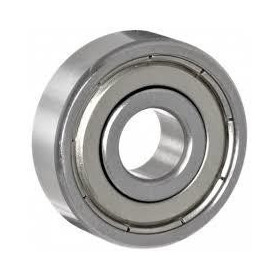
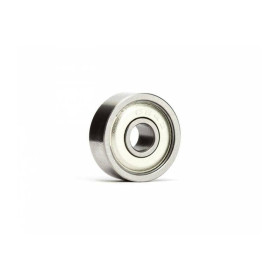
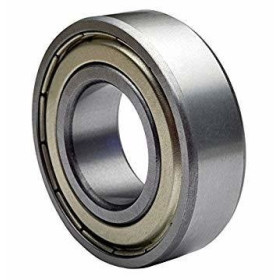
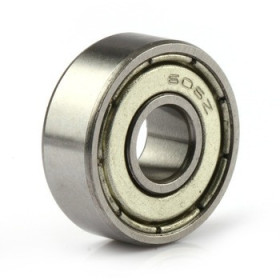
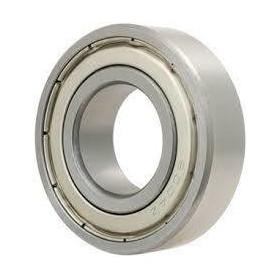
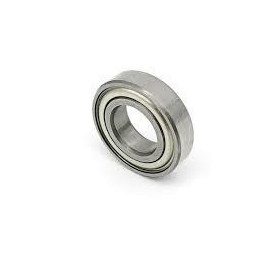
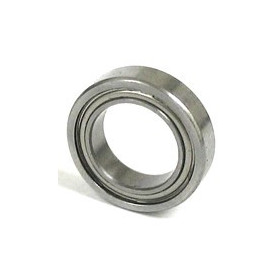
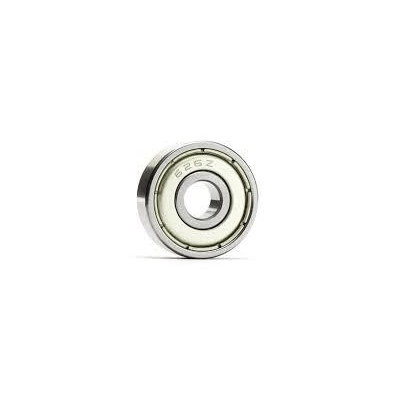
626ZZ Bearing, 6 x 19 x 6 mm, radial ball bearing, ZZ metal shields
Ball bearing for smooth rotation and reduced friction in compact mechanisms, with 6x19x6 mm dimensions for precise mounting, ZZ shielded with protection on both sides against dust, provides stability at high speeds and good durability in continuous use.
Buying this product earns you 0.24 RON in loyalty points.

International fast shipping within EU. Free Shipping for orders above 100 EUR in most EU countries.

We ship from our stock within 24H

You earn points with every order, worth 5%.
The 626ZZ is a radial ball bearing with a single row of balls in a deep groove and two metal shields, used to support a 6 mm shaft that must rotate smoothly. It is suitable for guide rollers, belt tension rollers, idler wheels, extruder mechanisms on 3D printers and other small mechanisms built by makers, electronics enthusiasts and companies.
The bearing has an inner diameter of 6 mm, an outer diameter of 19 mm and a thickness of 6 mm. The two metal shields, marked by the ZZ suffix in the name, cover both sides, retain the grease inside and stop large dust particles. The bearing is factory greased and must not be washed or degreased. It mainly supports radial loads, meaning loads perpendicular to the shaft, and small axial loads.
The main features include the steel inner and outer rings, the balls that replace sliding friction with rolling friction, the metal shields on both sides and grease lubrication. It is a passive mechanical part that does not require a power supply.
Specifications:
Type: Radial ball bearing, single row of balls, deep groove
Model: 626ZZ
Protection: Two metal shields (ZZ), on both sides
Lubrication: Grease, factory applied
Dimensions: 6 x 19 x 6 mm (inner diameter x outer diameter x thickness)
Usage:
Check the dimensions of the bearing and of the parts it fits into before mounting, using a caliper. The shaft must be 6 mm, and its housing or roller must have a 19 mm bore.
Clean the parts that receive the bearing and remove burrs. The surfaces must be smooth so that the bearing rings do not deform.
If the bearing is press-fitted onto the shaft, press only on the inner ring, with a tube or a sleeve that touches only this ring. If it is press-fitted into the housing, press only on the outer ring.
Do not apply the mounting force through the opposite ring, because forces transmitted through the balls can mark the raceways and the bearing will run noisily.
Press the bearing straight, without tilting it, using a bench press or a small vise, slowly. Do not strike the ring directly with a hammer and do not press on the shields.
Use spacers that touch only the inner ring and avoid washers that touch the outer ring, because they would block the rotation.
Tighten the nut until the parts have no axial play, then loosen it slightly by a fraction of a turn. The assembly is correct if the outer ring rotates freely and without visible lateral play.
Place the inner ring on the smooth area of the shaft, not on the thread, to avoid play between the shaft and the bearing.
Do not heat the bearing with a flame, do not solder it and do not clean it with solvents, because these remove the grease inside.
For fine dust, water or humidity, add a cap or other additional protection, because the metal shields do not seal the bearing.
- Dimensions
- 6 x 19 x 6 mm
- Model
- 626ZZ
- Type
- Radial ball bearing, single row, deep groove
- Thickness
- 6 mm
- Outer diameter
- 19 mm
- Inner diameter
- 6 mm
Produs destinat utilizarii in proiecte electronice, automatizari, prototipare, educatie si cercetare.
Produsul trebuie utilizat numai conform specificatiilor tehnice mentionate in descriere si/sau in documentatia produsului.
Avertismente generale de siguranta:
Nu utilizati produsul la tensiuni, curenti sau temperaturi peste valorile specificate.
Montajul si conectarea trebuie realizate de persoane cu cunostinte tehnice minime in domeniul electric/electronic.
Evitati scurtcircuitele, inversarea polaritatii si conectarea gresita a alimentarii.
Nu lasati produsul alimentat nesupravegheat in timpul testelor.
Produsul nu este jucarie si nu este destinat copiilor.
Pentru modulele electronice, se recomanda utilizarea in carcase, panouri sau montaje protejate, dupa caz.
Identificare produs:
Denumirea produsului, codul/SKU-ul si caracteristicile tehnice sunt mentionate in pagina produsului si/sau pe eticheta ambalajului.
Producator / Importator / Distribuitor:
Sigmanortec S.R.L.
Calea Bucuresti nr. 9, Targu Jiu, Gorj, Romania
E-mail: [email protected]
Website: www.sigmanortec.ro
Persoana responsabila in UE:
Sigmanortec S.R.L.
Calea Bucuresti nr. 9, Targu Jiu, Gorj, Romania
E-mail: [email protected]
Documentatie si siguranta:
Pentru informatii suplimentare, fise tehnice, declaratii de conformitate sau instructiuni, ne puteti contacta la [email protected].

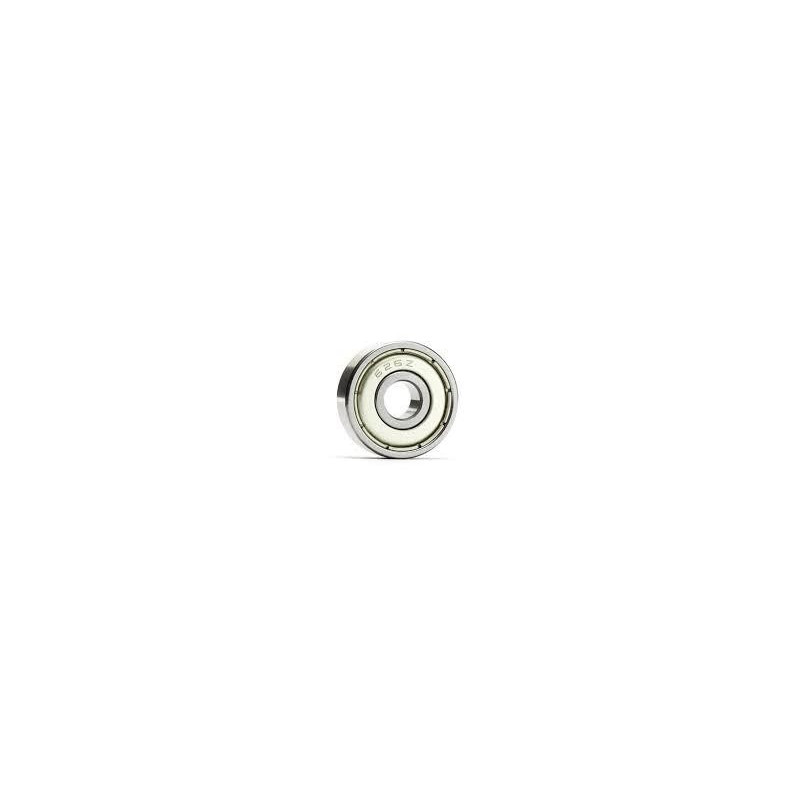
This tutorial presents the 626ZZ bearing as a standalone mechanical part. It has no power supply, it does not need a program and it does not connect electrically, so the tutorial only explains how to choose its location, how to mount it and how to check it. It is a single-row deep groove ball bearing with two metal shields, used in projects to support a 6 mm shaft that rotates easily, for example in guide rollers, idler wheels, belt tensioner rollers and extruder mechanisms.
The bearing dimensions are 6 mm inner diameter, 19 mm outer diameter and 6 mm thickness.
How it works:
The bearing has two steel rings, one inner and one outer, and the balls roll between them. The balls replace the sliding friction between the shaft and the housing with rolling friction, which is much lower. For this reason the shaft turns with little effort, heats up less and wears out more slowly.
The two metal shields, marked by the ZZ suffix in the name, cover both faces of the bearing. They keep the grease inside and stop large dust particles, but they do not seal the bearing. The bearing is greased at the factory and must not be washed or degreased.
For a roller mounted on the bearing, the distance covered in one full rotation of the outer ring is the circumference: C = 3.1416 x 19 mm = about 59.7 mm. At a linear speed of the belt or wire of 100 mm/s, the roller makes about 100 / 59.7 = 1.7 rotations per second, that is about 100 rotations per minute. This is a very light duty for this bearing.
A deep groove ball bearing mainly supports radial loads and small axial loads. For large axial forces, the project must use a thrust bearing or several support points.
Connection:
The bearing does not connect electrically. It fits mechanically on a shaft and in a housing or roller, as shown in the table. Check the dimensions with a caliper before mounting.
| Product pin | Connects to | Role |
|---|---|---|
| Inner ring, 6 mm | Shaft or screw with 6 mm diameter | Sits on the shaft with a light fit, without visible play. |
| Outer ring, 19 mm | Housing or roller with 19 mm bore | Rotates freely in the housing or together with the roller. |
| Thickness, 6 mm | Spacers and housing walls | The housing and spacers are sized for a bearing width of 6 mm. |
| ZZ shields, both faces | Not connected to anything | Do not press or hit them. The mounting force is applied to the ring that is fitted tightly. |
Setup:
First choose the mounting type. If the shaft stays fixed and the roller turns, the inner ring is mounted on the shaft and the outer ring fits into the roller. If the shaft turns, the inner ring is mounted tightly on the shaft and the outer ring sits in the housing.
Clean the parts and remove burrs, then check with your fingers that the bearing turns freely and without roughness.
If the bearing is pressed onto the shaft, press only on the inner ring, with a tube or a sleeve that touches only this ring. If it is pressed into the housing, press only on the outer ring. Press straight and slowly, with no hammer directly on the ring, using a bench press or a small vise.
Usage example:
The example is a guide roller with an outer diameter of 19 mm, mounted on a 6 mm shaft, for guiding a wire or a belt.
Prepare an M6 screw or a shaft with 6 mm diameter, two spacers with a 6 mm hole that rest only on the inner ring, and two nuts or one nut with a washer.
Insert the bearing into the roller or into the 19 mm housing, pressing on the outer ring. Pass the shaft through the inner ring and place one spacer on each side, so that they touch only the inner ring.
Tighten the nut until the parts have no axial play, then loosen it slightly by a fraction of a turn. The outer ring must rotate freely. If the roller turns easily and without visible side play, the assembly is correct.
Common problems:
The bearing turns hard after mounting. The usual cause is a washer or spacer touching the outer ring, or a nut tightened too much. Make sure the spacers touch only the inner ring and loosen the nut until the roller turns freely.
The bearing makes noise or feels rough when turning. The cause may be pressing on the wrong ring during mounting, dirt that got into the bearing, or an impact. Replace the bearing, because a bearing with damaged raceways cannot be repaired.
The bearing wobbles on the shaft or in the housing. The cause is too much clearance between parts, for example a hole larger than 19 mm in a 3D printed part. Rebuild the housing to 19 mm, checking the size with a caliper, or use a retaining adhesive for parts that will not be taken apart again.
The bearing locks up after a period of time. The cause may be dust or liquids that got past the metal shields, because these are not sealed. Protect the bearing with a cover or move the part away from dust, oil or water.
The shaft has play in the bearing. The cause is a shaft thinner than 6 mm, for example a screw with reduced diameter in the threaded area. Place the inner ring on the smooth area of the shaft, not on the thread, and check the diameter with a caliper.
Limitations and tips:
The 626ZZ bearing is suitable for small and medium loads, such as those in 3D printers, small mechanisms, toys, guide rollers and automation projects. Do not use it for heavy loads or strong shocks, because its small size limits the force it can handle.
The metal shields protect the grease, but they do not make the bearing sealed. For environments with fine dust, water or humidity, add extra protection. Avoid cleaning with solvents, because they remove the grease from inside.
Do not heat the bearing with a flame and do not glue it. For 3D printed parts, choose a material and a tolerance that give a 19 mm housing as accurate as possible. With several of these bearings you can build guide rollers, belt tensioning systems or idler wheels for small mechanisms.