
Product images are for informational purposes only and may vary slightly depending on the batch and supplier. Product specifications and prices may be subject to change without notice. We do our best to provide accurate and complete product specifications, but they may not be completely accurate. If you encounter any such situation, please let us know.
The product is intended for specialists and requires qualified and authorized personnel. The product does not include assembly/use instructions . Putting the product into operation by unqualified persons leads to the loss of the warranty according to the Terms and Conditions on the site.
The specified technical parameters (current, power, etc.) represent maximum allowable values under ideal operating conditions. For safe use and optimal lifespan, it is recommended to operate the product continuously at no more than 50% of the specified maximum values.
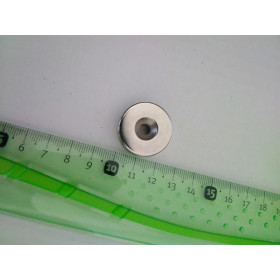
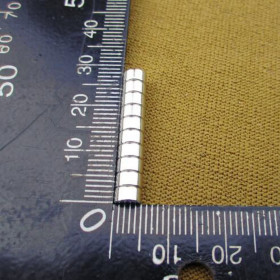
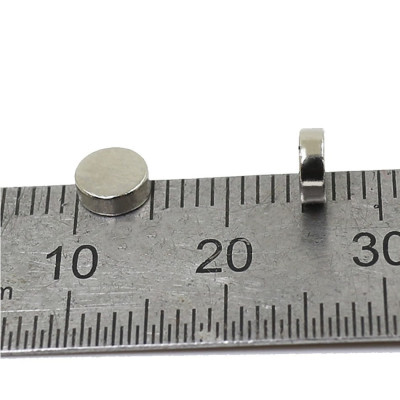
Neodymium Permanent Magnet 5x2, Disc, 5 mm Diameter, 2 mm Thickness
Ideal for quick and precise fixings in electronic projects, DIY or light industrial applications, it offers high holding force relative to its size. Made of neodymium for strong magnetization, it has a 5x2 mm disc format for discreet mounting, stable adhesion to metal surfaces and good wear resistance in repeated use.
Buying this product earns you 0.04 RON in loyalty points.

International fast shipping within EU. Free Shipping for orders above 100 EUR in most EU countries.

We ship from our stock within 24H

You earn points with every order, worth 5%.
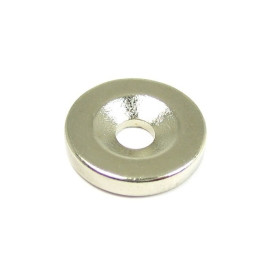
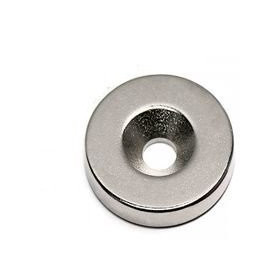
The 5x2 neodymium permanent magnet is a small disc with a silver metallic coating, used in electronic and mechanical projects. It can actuate Hall effect sensors and reed contacts, hold light parts in place, make discrete magnetic closures or mark the position of a moving element, for example a lid, a drawer or a wheel.
Neodymium is a hard magnetic material that retains its magnetization without any energy source. The disc has a diameter of 5 mm and a thickness of 2 mm. The magnetic field is strongest near the faces of the disc and decreases rapidly with distance, so the magnet acts effectively at distances on the order of millimetres.
The main features include the disc shape, small dimensions, a mass of approximately 0.3 g, the silver metallic coating and permanent magnetization. As a passive component, the magnet does not need power and is not electrically connected to anything. It is mounted mechanically, by gluing with adhesive, into a cavity or onto a flat surface.
Specifications:
Type: Permanent magnet
Material: Neodymium
Shape: Disc
Coating: Metallic, silver
Dimensions: 5 x 2 mm
Usage:
Check first which face of the magnet activates the sensor. Bring the magnet close to the sensor with one face, then turn it over and try with the other face.
Mark the face that activates the sensor with a dot of marker, so that you mount all magnets identically.
For mounting in a 3D printed or machined housing, prepare a cavity with a diameter of approximately 5.1 mm and a depth of 2 mm. Fix the magnet with a drop of cyanoacrylate or epoxy adhesive, applied on the face that stays in the cavity, not on the active face.
For fixing on a flat surface, clean the surface of grease, apply a small amount of adhesive to one of the faces and press the magnet for a few seconds. Let the adhesive cure completely before bringing other magnetic parts close.
For position detection, start from a distance of approximately 3 mm between the magnet and the sensor and adjust it until the sensor reacts reliably.
Separate the magnets by sliding them sideways along the edge of the surface, not by pulling them perpendicularly, and keep them in separate boxes.
Do not let two magnets collide freely, because neodymium is brittle and can break. Do not heat the magnet by soldering and do not machine it by drilling or cutting.
Keep the magnet away from pacemakers, magnetic cards, hard drives, compasses and magnetometers. Keep it out of reach of small children, because swallowing two magnets is dangerous.
- Dimensions
- 5 x 2 mm
- Material
- Neodymium
- Type
- Permanent magnet
- Shape
- Disc
Produs destinat utilizarii in proiecte electronice, automatizari, prototipare, educatie si cercetare.
Produsul trebuie utilizat numai conform specificatiilor tehnice mentionate in descriere si/sau in documentatia produsului.
Avertismente generale de siguranta:
Nu utilizati produsul la tensiuni, curenti sau temperaturi peste valorile specificate.
Montajul si conectarea trebuie realizate de persoane cu cunostinte tehnice minime in domeniul electric/electronic.
Evitati scurtcircuitele, inversarea polaritatii si conectarea gresita a alimentarii.
Nu lasati produsul alimentat nesupravegheat in timpul testelor.
Produsul nu este jucarie si nu este destinat copiilor.
Pentru modulele electronice, se recomanda utilizarea in carcase, panouri sau montaje protejate, dupa caz.
Identificare produs:
Denumirea produsului, codul/SKU-ul si caracteristicile tehnice sunt mentionate in pagina produsului si/sau pe eticheta ambalajului.
Producator / Importator / Distribuitor:
Sigmanortec S.R.L.
Calea Bucuresti nr. 9, Targu Jiu, Gorj, Romania
E-mail: [email protected]
Website: www.sigmanortec.ro
Persoana responsabila in UE:
Sigmanortec S.R.L.
Calea Bucuresti nr. 9, Targu Jiu, Gorj, Romania
E-mail: [email protected]
Documentatie si siguranta:
Pentru informatii suplimentare, fise tehnice, declaratii de conformitate sau instructiuni, ne puteti contacta la [email protected].
Reviews (3) - Review moderation

Produse f.bune
Conform asteptarilor
Foarte multumit, recomand aceasta firma.
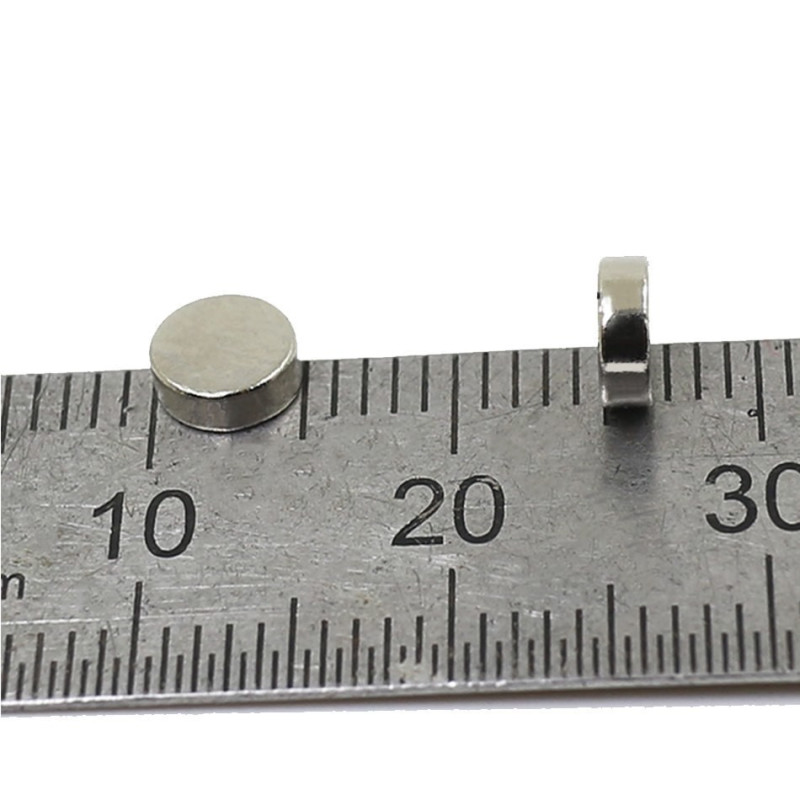
The 5x2 neodymium permanent magnet is a small disc with a diameter of 5 mm and a thickness of 2 mm, with a silver metallic coating. It is a passive part with no power supply and no program, so this tutorial shows how to choose the position, how to fix it and how to check the magnet, step by step.
It is used in electronic and mechanical projects to actuate Hall effect sensors and reed contacts, for discrete magnetic closures, for holding light parts and for marking the position of a moving element.
How it works:
The magnet is made of neodymium, a hard magnetic material that keeps its magnetization without any energy source. The magnetic field is strongest near the faces of the magnet and decreases very quickly with distance. This is why a magnet of this type actuates a sensor or sticks to an iron part only when it gets within distances of the order of millimeters.
The volume of the disc is calculated with the formula V = 3.1416 x (d / 2)^2 x h. For d = 5 mm and h = 2 mm we get V = 3.1416 x 6.25 x 2 = 39.3 mm3, that is 0.0393 cm3. Neodymium has a density of approximately 7.5 g/cm3, so the magnet has a mass of approximately 0.3 g. Due to its small mass, the magnet can be mounted on light parts without loading them.
A magnet has two poles, north and south. Two magnets attract when different poles come close together and repel when identical poles come close together. This property is used to choose the correct face of the magnet relative to a sensor or relative to a second magnet.
Connection:
The magnet has no pins and does not connect electrically to anything. It does not need a power supply, a level converter or resistors. It is mounted mechanically, in a cavity or on a flat surface, at the right distance from the sensor or the iron part it actuates.
| Product pin | Connects to | Role |
|---|---|---|
| No pins | Mechanical mounting (cavity or flat surface) | Creates the magnetic field that actuates the sensor or the iron part. |
Configuration:
First check which face of the magnet is attracted to your sensor. Bring the magnet close to the sensor with one face, then turn it over and try the other face. Mark the face that actuates the sensor with a dot of marker, so that you mount all the magnets identically.
For mounting in 3D printed or machined housings, prepare a cavity with a diameter of approximately 5.1 mm and a depth of 2 mm. The magnet goes in with a slight force, and a drop of cyanoacrylate or epoxy adhesive fixes it permanently. The adhesive is applied to the face that stays in the cavity, not to the active face.
For fixing on a flat surface, clean the surface of grease, apply a small amount of adhesive to one of the faces and press the magnet for a few seconds. Let the adhesive harden completely before bringing other magnetic parts close.
Usage example:
The proposed application is detecting the closing of a lid with a reed contact or with a Hall effect sensor. Mount the magnet on the edge of the lid, with the marked face towards the outside, and fix the sensor on the body, in line with the magnet.
Close the lid and measure the distance between the magnet and the sensor. Start from approximately 3 mm. Check with a multimeter in the continuity position or with the sensor output whether it reacts when the lid closes and whether it returns to its initial state when the lid opens. If it does not react, reduce the distance or turn the magnet over to the other face.
After the contact is stable, open and close the lid at least ten times to make sure the detection is repeatable. Then permanently fix the magnet and the sensor in the positions found.
Common problems:
The magnet sticks to other magnets or to tools and is hard to separate. The cause is the strong attraction at contact. The solution is to slide the magnet sideways along the edge of the surface instead of pulling it perpendicular, and to keep the magnets in separate boxes.
The sensor does not react to the magnet. The cause may be a distance that is too large or the wrong face of the magnet. The solution is to reduce the distance and try the other face of the magnet.
The magnet comes out of its seat. The cause is a lack of adhesive or a cavity that is too large. The solution is to clean the cavity and use cyanoacrylate or epoxy adhesive, with a cavity of approximately 5.1 mm.
The magnet has chipped or broken. The cause is the fragility of neodymium, which breaks on impact when two magnets attract freely. The solution is to guide the approach of the magnets and to replace the damaged part.
The magnet has lost strength. The cause may be exposure to high temperatures, of the order of 80 degrees C or more, or to humidity after the coating has been damaged. The solution is to mount it away from heat sources and to replace it if the coating is flaking.
Limitations and tips:
The magnet is small and has limited holding force, suitable for light parts, sensors and discrete closures. For heavier loads, use larger magnets or several magnets.
Keep the magnet away from pacemakers, magnetic cards, hard disks and compasses or magnetometers, because it can affect them. Keep it away from small children, since swallowing two magnets is dangerous.
Do not heat the magnet by soldering and do not machine it by drilling or cutting. For more advanced projects you can combine several magnets to obtain a stronger field, or you can use the magnet as a marker on a wheel to measure rotation speed with a Hall sensor.