
Product images are for informational purposes only and may vary slightly depending on the batch and supplier. Product specifications and prices may be subject to change without notice. We do our best to provide accurate and complete product specifications, but they may not be completely accurate. If you encounter any such situation, please let us know.
The product is intended for specialists and requires qualified and authorized personnel. The product does not include assembly/use instructions . Putting the product into operation by unqualified persons leads to the loss of the warranty according to the Terms and Conditions on the site.
The specified technical parameters (current, power, etc.) represent maximum allowable values under ideal operating conditions. For safe use and optimal lifespan, it is recommended to operate the product continuously at no more than 50% of the specified maximum values.
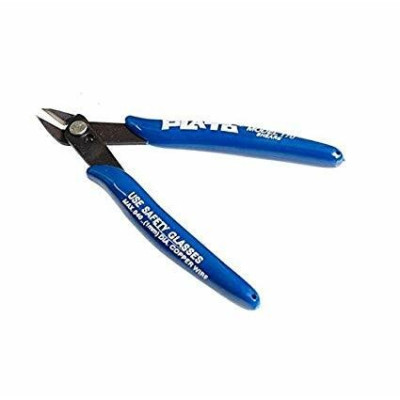
PLATO 170 Flush Cutter Pliers, Flush Cut, Copper Max 1mm, 131mm
Precision pliers for cutting copper wires up to 1 mm diameter, ideal for electronics and fine wiring work. Delivers a clean cut with low effort, a slim tip for access to tight spaces, robust construction for repeated use, and ergonomic handles for control and comfort.
Buying this product earns you 0.58 RON in loyalty points.

International fast shipping within EU. Free Shipping for orders above 100 EUR in most EU countries.

We ship from our stock within 24H

You earn points with every order, worth 5%.
The PLATO 170 flush cutter pliers are a precision hand tool for trimming component leads after soldering, cutting thin copper wires and cleaning small plastic parts. They cut flush, with a narrow head and slim profile, and reach easily into hard-to-access areas of a circuit board, which makes them suitable for electronic assembly, repairs and bench work.
The blades work by shearing, that is, they pass past each other like a pair of scissors, and do not strike head-on. Cutting requires less force than with pliers that crush the wire. The maximum cutting capacity is 1 mm diameter for copper wire, a value also marked on the handle. The overall length is 131 mm.
The main features include flush-cutting blades, crossed arms joined by a rivet, blue soft-grip handles and automatic return of the handles to the open position after each cut. The handle is marked with the warning USE SAFETY GLASSES. The tool needs no power supply and no adjustment.
Specifications:
Model: PLATO 170
Type: Flush cutter pliers, cutting by shearing
Cutting capacity: Copper wire, maximum 1 mm diameter
Blade profile: Slim, flush cut
Handles: Soft-grip, with automatic return
Handle colour: Blue
Dimensions: 131 mm
Layout:
| Element | Function |
|---|---|
| Cutting blades | Cut the wire by shearing. They have a flat face and a slightly bevelled one. The flat face is oriented towards the part that remains, for example the circuit board. |
| Pivot rivet | Joins the two crossed arms and acts as the pivot. It must be tight, with no lateral play. |
| Arms | Transmit the force from the handles to the blades. The long handle arms and the short blades, close to the rivet, increase the cutting force. |
| Soft-grip handles | Provide a comfortable grip and return automatically to the open position after each cut. |
| Markings on the handle | Mark the PLATO 170 model, the 1 mm diameter copper cutting limit and the warning USE SAFETY GLASSES. |
Usage:
Wear safety glasses before any cutting, because cut lead ends can fly off at high speed.
Before use, check that the rivet is tight, that the handles have no lateral play and that the blades close completely, with no gap of light between them.
Orient the flat face of the blades towards the part that remains, for example the board, and the bevelled face towards the end that will be removed. This way the cut comes out almost level with the solder joint.
Position the blades perpendicular to the wire or the component lead, 1 - 2 mm above the solder joint, then squeeze the handles firmly, in one single motion. Do not twist or jerk the pliers.
Do not cut copper wires thicker than 1 mm, nor hard materials such as steel wire, screws or piano wire, because the blades will deform or chip.
Do not use the pliers on live conductors.
Cover the end being cut with your finger or a piece of cardboard and direct the cut towards a free corner of the bench, then collect the cut ends, because they can short-circuit the contacts if they remain on the board.
- Dimensions
- 131 mm
- Model
- PLATO 170
- Type
- Flush cutter with shear cutting
- Colour
- Blue
Produs destinat utilizarii in proiecte electronice, automatizari, prototipare, educatie si cercetare.
Produsul trebuie utilizat numai conform specificatiilor tehnice mentionate in descriere si/sau in documentatia produsului.
Avertismente generale de siguranta:
Nu utilizati produsul la tensiuni, curenti sau temperaturi peste valorile specificate.
Montajul si conectarea trebuie realizate de persoane cu cunostinte tehnice minime in domeniul electric/electronic.
Evitati scurtcircuitele, inversarea polaritatii si conectarea gresita a alimentarii.
Nu lasati produsul alimentat nesupravegheat in timpul testelor.
Produsul nu este jucarie si nu este destinat copiilor.
Pentru modulele electronice, se recomanda utilizarea in carcase, panouri sau montaje protejate, dupa caz.
Identificare produs:
Denumirea produsului, codul/SKU-ul si caracteristicile tehnice sunt mentionate in pagina produsului si/sau pe eticheta ambalajului.
Producator / Importator / Distribuitor:
Sigmanortec S.R.L.
Calea Bucuresti nr. 9, Targu Jiu, Gorj, Romania
E-mail: [email protected]
Website: www.sigmanortec.ro
Persoana responsabila in UE:
Sigmanortec S.R.L.
Calea Bucuresti nr. 9, Targu Jiu, Gorj, Romania
E-mail: [email protected]
Documentatie si siguranta:
Pentru informatii suplimentare, fise tehnice, declaratii de conformitate sau instructiuni, ne puteti contacta la [email protected].
Reviews (14) - Review moderation

Buna ziua, Am cumparat o data ulterioara acest produs, si, a fost OK, frumos ambalat la blister, am spus: chiar merita o noua comanda, m-am pacalit, acum le-am primit vrac, manerele legate cu scotch!! Dezamagit.. Multumesc,
Multumit
5
Am cumparat acest produs si la prima folosire s-a rupt! Clestele pare lucrat serios,chiar daca pretul este destul de mic! Nu stiu daca a foat defect de fabricatie sau am avut eu ghinion insa nu m-am folosit deloc de el asa ca nu pot sa il recomand! Va multumesc!
Surprinzator de bun la pretul asta. Excelent pentru taieturi curate la terminale
This tutorial shows how to set up and use the PLATO 170 flush cutters. It is a manual tool, so it does not need power, a program or any board. It is used directly, by hand, at the bench.
The cutters cut flush and have a narrow head with small blades. They are used for trimming component legs after soldering, cutting thin copper wires and cleaning small plastic parts. The cutting limit is engraved on the handle: copper up to 1 mm diameter.

How it works:
The cutters have two crossed arms, joined by a rivet that acts as the pivot. Each arm has a blade at one end and a handle at the other. When you squeeze the handles, the blades move closer and cut the wire between them, like scissors. The blades pass by each other and do not strike head on, so the cutting effort is lower.
The cutting force increases through the lever effect. The force from the hand is multiplied by the ratio between the length of the handle arm and the length of the blade arm, measured from the rivet: F cutting = F hand x (L handle / L blade). As an example, if the handle arm is 8 times longer than the blade arm, a force of 20 N in the hand reaches about 160 N at the cut. The real ratio of this cutter is not specified, and the example only shows the principle. That is why the handles are long and the blades short and very close to the rivet.
The 1 mm limit corresponds to a round copper wire. The cross section area is pi x (d / 2) x (d / 2) = 3.14 x 0.5 x 0.5, which is about 0.79 mm², equivalent to roughly 18 AWG. A 2.54 mm header pin has a square section of 0.64 mm², and its diagonal is 0.64 x 1.41, about 0.9 mm. It is below the limit and can be cut without problems. A thicker or harder wire exceeds the capacity of the blades and damages them.
Connection:
Nothing needs to be connected for this product. The cutters have no power supply, pins or interface. Before the first use, just check that the rivet is tight, that the blades close completely and that the handles have no side play.
Configuration:
The cutters have no adjustments, buttons or switches. Preparation consists of a few checks and choosing materials that can be cut. Follow the order below.
Wear safety glasses. The handle is marked USE SAFETY GLASSES, and cut ends can fly off at high speed and reach your eyes.
Close the cutters with no part between the blades and look through the light. The blades must touch along the whole length of the edge, with no gap. If you can see light between them, do not cut thick wires with these cutters.
Look at the two faces of the blades. One is flat and the other is slightly bevelled. Place the flat face toward the part that stays, for example toward the circuit board, and the bevelled face toward the end that is removed. This way the cut comes out almost level with the solder joint.
| Material | Can be cut | Notes |
|---|---|---|
| Copper wire up to 1 mm | Yes | This is the limit engraved on the handle. Cut perpendicular to the wire. |
| Resistor, diode, capacitor legs | Yes | Cut above the solder joint, without pulling on the component. |
| 2.54 mm header pins | Yes | The pin diagonal is under 1 mm. Cut in one single movement. |
| Flexible wires with thin insulation | Yes | The cut is clean if the wire is held well between the blades. |
| Plastic cable ties, 3D printing plastic offcuts | Yes | Only for thin parts. Do not force. |
| Steel wire, screws, nails, piano wire | No | The material is too hard and the blades chip. |
| Copper wires thicker than 1 mm | No | They exceed the cutting limit and deform the blades. |
| Live conductors | No | The tool is not intended for live work. |
Example of use:
Suppose you have soldered a header of pins on a module and a 10 kOhm resistor on a test board, and the legs stick out a lot on the solder side. The goal is to trim them to 1 - 2 mm above the solder joint, without damaging the board.
Turn the board with the solder side up and place it firmly on the bench. Put on your safety glasses. Cover the end of the leg you are cutting with your finger or a piece of cardboard, so that it does not fly off.
Place the cutters with the flat face toward the board. Position the blades over the first leg, 1 - 2 mm above the solder joint. The cutters must be perpendicular to the leg, not tilted.
Squeeze the handles firmly in one single movement. The leg cuts with a short click. Do not twist or jerk the cutters, because side forces scratch the blades and can pull the pad off the board. Repeat for each leg.
At the end, check the result. The cuts must be clean and at the same height, and the solder joints must stay intact. Collect the cut ends from the bench, because they can short circuit the contacts if they stay on the board.
Common problems:
The wire is crushed or bent and does not cut. The cause is usually a wire that is too thick or too hard, for example steel or copper over 1 mm. Use a stronger cutter for that material and keep these cutters only for thin wires.
The cut is smooth on one side, and a sharp point remains on the other. The cause is that the flat face of the blades was turned toward the end that is removed. Rotate the cutters so that the flat face is toward the part that stays.
The blades no longer close completely, and thin wires remain uncut. The cause is wear or chipping of the blades, usually after cutting materials that are too hard. Check the edge in the light. If it shows marks, use the cutters only for very thin wires or replace them.
The cutters have play between the arms. The cause is a loose rivet. Check whether you can tighten it carefully. If not, replace the cutters, because large play spoils the cutting.
Cut ends fly in all directions. The cause is tension in the wire. Wear safety glasses, cut with the end pointing toward a free corner of the bench, and cover the leg with your finger or a piece of cardboard.
Limitations and tips:
The cutters are intended for copper wires up to 1 mm diameter and small plastic parts. They are not suitable for steel, thick wires or live conductors. Do not use them as a lever, a hammer or to twist wires, because the fine blades deteriorate easily.
Keep the cutters clean and dry, with the handles open or lightly closed, and dedicate them to bench work, separate from the cutters for hard materials. This way the edge stays sharp for a long time and the cuts remain clean and flush.