

Product images are for informational purposes only and may vary slightly depending on the batch and supplier. Product specifications and prices may be subject to change without notice. We do our best to provide accurate and complete product specifications, but they may not be completely accurate. If you encounter any such situation, please let us know.
The product is intended for specialists and requires qualified and authorized personnel. The product does not include assembly/use instructions . Putting the product into operation by unqualified persons leads to the loss of the warranty according to the Terms and Conditions on the site.
The specified technical parameters (current, power, etc.) represent maximum allowable values under ideal operating conditions. For safe use and optimal lifespan, it is recommended to operate the product continuously at no more than 50% of the specified maximum values.
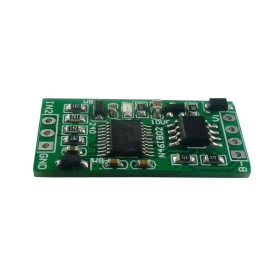
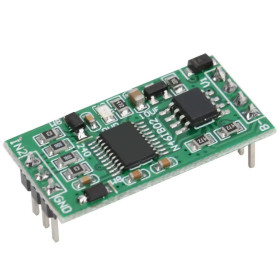
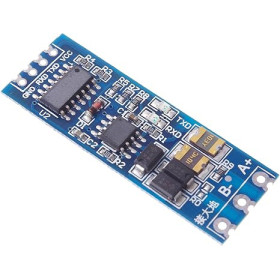
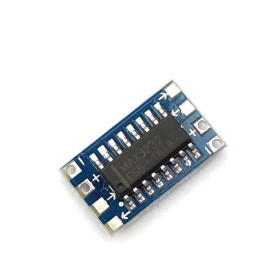
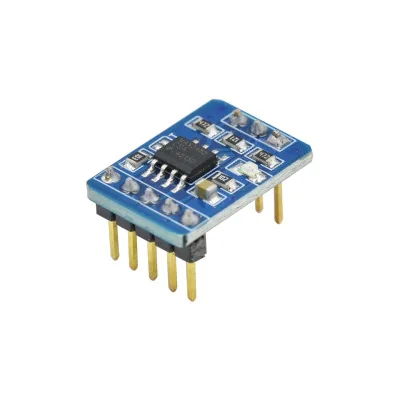
TTL to RS485 converter module, MAX3485, 3.3V
Compact converter for quick connection of 3.3V microcontrollers to RS485 networks, providing bidirectional TTL-RS485 conversion for stable industrial communication, supports long distances up to 1 km with suitable cable, includes ESD and overvoltage protection, direction is simply controlled by the EN pin for a semiduplex bus with multiple nodes.
Shipping by Thursday 22 October
Buying this product earns you Ft39.45 in loyalty points.

International fast shipping within EU. Free Shipping for orders above 100 EUR in most EU countries.

We ship from our stock within 24H

You earn points with every order, worth 5%.
The TTL/RS485 converter module based on the MAX3485 integrated circuit is designed to provide reliable communication between microcontrollers and RS485 industrial networks.
It accepts 3.3V level TTL logic signals and bidirectionally converts them into differential RS485 signals, allowing easy integration with platforms such as Arduino, ESP32, STM32, or any other embedded system compatible with 3.3V levels.
The module supports transmissions over distances up to 1 km (recommended up to 800 m without repeaters, using 1.5 mm² cable), making it suitable for industrial automation applications, remote control, and SCADA systems.
It features integrated protections against electrostatic discharge (ESD) and overvoltage, ensuring stable operation in demanding electrical environments. The module also includes a dedicated pin for connection to an external ground, recommended for outdoor installations or long cable lengths.
The communication direction is controlled via the EN pin (active HIGH for transmission), allowing simple implementation of a multi-node half-duplex bus.
Specifications:
Supply voltage: 3.3V
Integrated circuit: MAX3485
Interface: TTL (RX, TX) + control (RE/DE)
Transmission distance: Up to 1 km (recommended 800 m)
Protections: ESD and overvoltage
External ground: Dedicated external GND pin
Dimensions (with pins): 19.3 x 13.4 x 11.4 mm
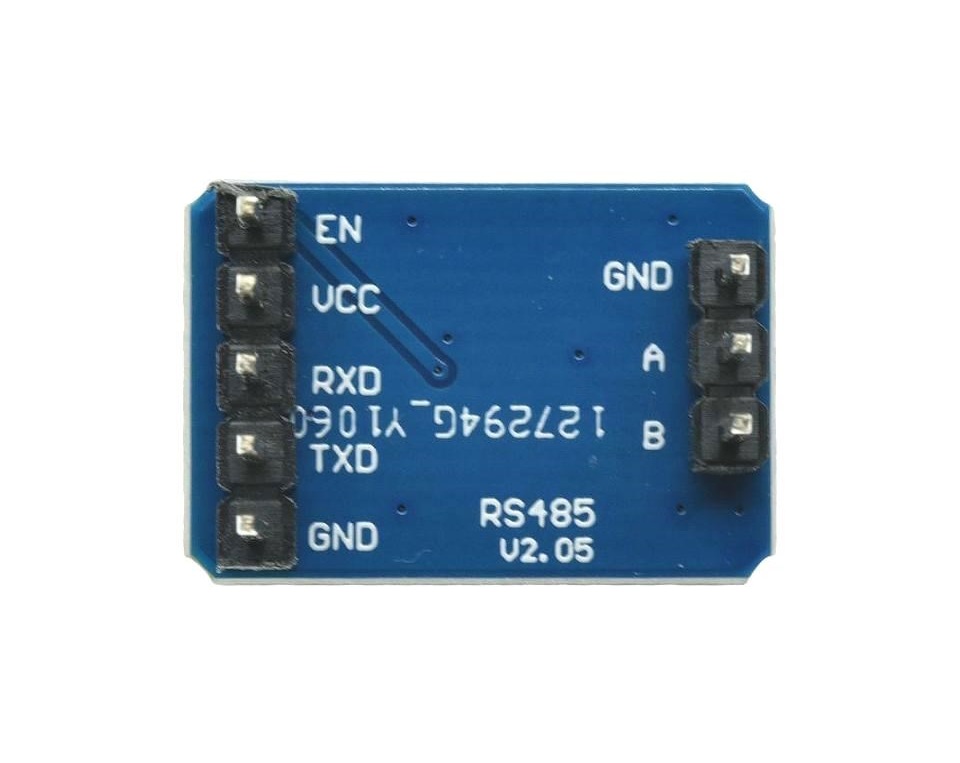
Pinout:
| Pin name | Pin description |
|---|---|
| GND | Ground |
| VCC | Positive supply (3.3 VDC) |
| A | RS485 line A (non-inverted / D+) |
| B | RS485 line B (inverted / D-) |
| RXO | TTL data reception (to microcontroller TX) |
| TXD | TTL data transmission (to microcontroller RX) |
| EN | Enable / Direction control (active HIGH for transmission) |
| GND | Ground (second ground pin) |
Usage:
Connect the module's VCC and GND pins to the system's 3.3V power supply.
Connect the module's TXD pin to the microcontroller's RX pin and the RXO pin to the microcontroller's TX pin.
Connect the A and B lines to the RS485 network (observing polarity: A = D+, B = D-).
Control the communication direction via the EN pin: set HIGH for transmission, LOW for reception. In half-duplex modes, toggle EN before and after each transmitted message.
For outdoor applications or long cables, connect the external GND pin to the installation ground to reduce interference and improve signal stability.
Use a twisted pair differential cable (e.g., RS485 cable or Cat5e network cable) for long distances. Add 120Ω termination resistors at the line ends if the length exceeds 10 m.
- Input Voltage
- 3.3 V
- Input Voltage Type
- “DC” in Romanian can mean **“de ce”**, which translates to **“why”** in English.
- Main IC
- MAX3485
- Communication interface
- TTL / RS485
Produs destinat utilizarii in proiecte electronice, automatizari, prototipare, educatie si cercetare.
Produsul trebuie utilizat numai conform specificatiilor tehnice mentionate in descriere si/sau in documentatia produsului.
Avertismente generale de siguranta:
Nu utilizati produsul la tensiuni, curenti sau temperaturi peste valorile specificate.
Montajul si conectarea trebuie realizate de persoane cu cunostinte tehnice minime in domeniul electric/electronic.
Evitati scurtcircuitele, inversarea polaritatii si conectarea gresita a alimentarii.
Nu lasati produsul alimentat nesupravegheat in timpul testelor.
Produsul nu este jucarie si nu este destinat copiilor.
Pentru modulele electronice, se recomanda utilizarea in carcase, panouri sau montaje protejate, dupa caz.
Identificare produs:
Denumirea produsului, codul/SKU-ul si caracteristicile tehnice sunt mentionate in pagina produsului si/sau pe eticheta ambalajului.
Producator / Importator / Distribuitor:
Sigmanortec S.R.L.
Calea Bucuresti nr. 9, Targu Jiu, Gorj, Romania
E-mail: [email protected]
Website: www.sigmanortec.ro
Persoana responsabila in UE:
Sigmanortec S.R.L.
Calea Bucuresti nr. 9, Targu Jiu, Gorj, Romania
E-mail: [email protected]
Documentatie si siguranta:
Pentru informatii suplimentare, fise tehnice, declaratii de conformitate sau instructiuni, ne puteti contacta la [email protected].
// Example: RS485 communication using MAX3485 module
// Hardware: Arduino Uno or ESP32
// Connections: TXD -> RX pin, RXO -> TX pin, EN -> digital pin
#define EN_PIN 4 // Direction control pin
#define RX_PIN 16 // Connect to RXO on module (ESP32 example)
#define TX_PIN 17 // Connect to TXD on module (ESP32 example)
void setup() {
Serial.begin(115200); // Debug serial
Serial1.begin(9600, SERIAL_8N1, RX_PIN, TX_PIN); // RS485 serial
pinMode(EN_PIN, OUTPUT);
digitalWrite(EN_PIN, LOW); // Start in receive mode
}
void sendMessage(const char* msg) {
digitalWrite(EN_PIN, HIGH); // Switch to transmit
delayMicroseconds(100);
Serial1.print(msg);
Serial1.flush(); // Wait for transmission to complete
delayMicroseconds(100);
digitalWrite(EN_PIN, LOW); // Switch back to receive
}
void loop() {
sendMessage("HELLO RS485\n");
delay(1000);
if (Serial1.available()) {
String received = Serial1.readStringUntil('\n');
Serial.println("Received: " + received);
}
}